
On December 25-26, Guangzhou Nansha District hosted the 2025 Guangdong Future City Conference, which included the Nansha New Area Comprehensive Pilot Demonstration Work Annual Conference and the Future Community Development Workshp with Academicians and Experts. Under the theme "Building High-Quality Modern People-Oriented Cities: Collaborating to Create Future Communities," the event brought together over 300 representatives from government, industry, academia, and research sectors to explore new development pathways. At the opening ceremony, SUC Institute signed a strategic cooperation framework agreement with the conference organizers, focusing on implementing the United Nations Guidelines for Sustainable Cities and Communities to advance high-standard pilot projects for future cities and communities across the province.
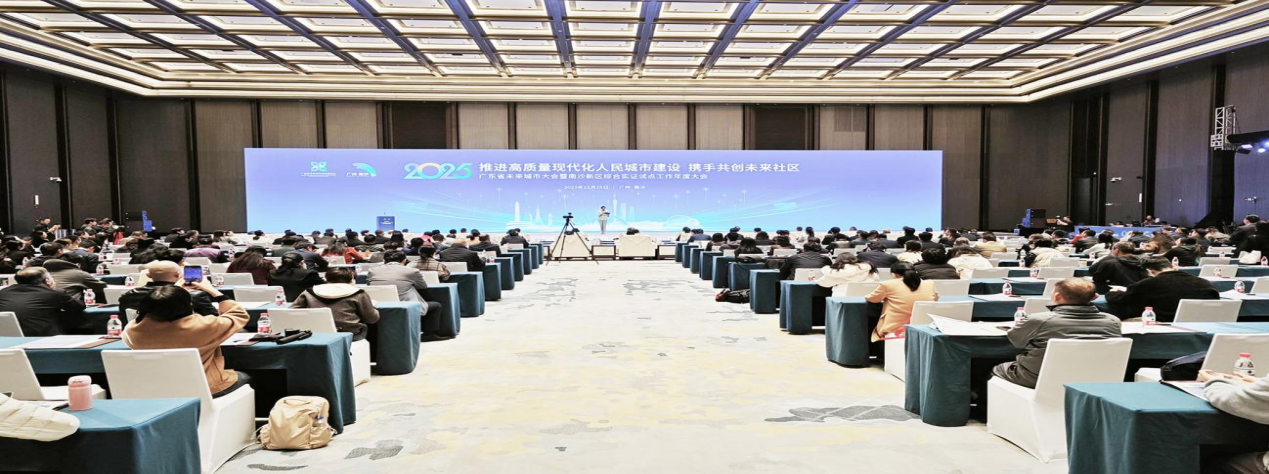
Guangdong Future City Conference and Nansha New Area Comprehensive Pilot Work Annual Conference 2025
The conference was jointly organized by the Guangdong Future Urban Development Promotion Association and the Planning and Natural Resources Bureau of Guangzhou Nansha Economic and Technological Development Zone, with the participation of relevant leaders from the Guangdong Provincial Department of Housing and Urban-Rural Development, the Department of Natural Resources, as well as Guangzhou and Nansha District. Academician Wu Zhiqiang, Academician Meng Jianmin, and Academician Peng Shou from the Chinese Academy of Engineering, along with Li Xiang, President of the SUC Institute-CIAPST, and Yin Bo, Deputy General Manager of China Academy of Building Research Co., Ltd., delivered speeches and participated in discussions, sparking extensive discussions among attendees.
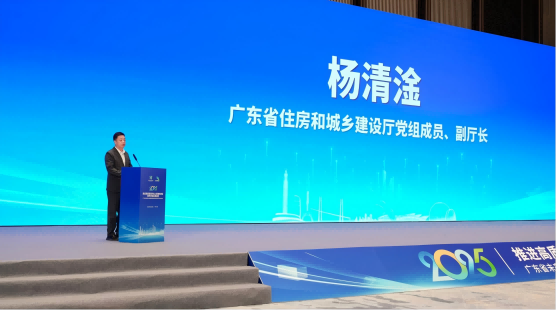
Yang Qinggan, Deputy Director of Guangdong Provincial Department of Housing and Urban-Rural Development, delivered a speech
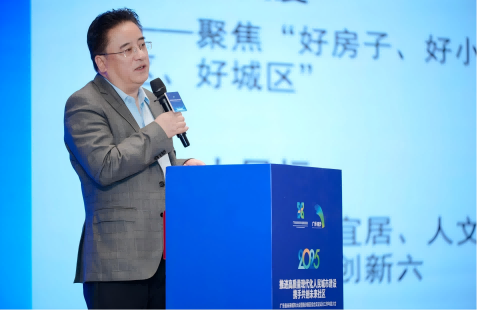
Keynote Speech by President Li Xiang of SUC Institute
In his keynote speech at the conference, Li Xiang stated that "future cities" have been a significant research field on sustainable urban development worldwide over the past decade, yet there is no unified definition. It focuses on the innovative application of next-generation technologies, knowledge, tools, concepts, and materials within urban systems. Its form integrates numerous characteristics such as intelligence, interconnectivity, productivity, resilience, ecology, livability, and health, but its essence remains unchanged—the core is a new type of city that integrates production, urban development, and humanistic elements, with a people-oriented and sustainable development-oriented approach. He proposed that Guangdong Province should take the SUC Guidelines as a guide, innovatively promote the construction of future cities and communities, and provide the "Guangdong Model" and "China Solution" for sustainable human settlement development nationwide and globally.
As the international highest standard for sustainable urban and community development, the SUC Guidelines were developed by the United Nations Environment Programme (UNEP) and co-authored by multiple UN agencies and domestic and international organizations. It covers three parts: evaluation criteria, management systems, and implementation guidelines, focusing on over a dozen key dimensions for the future development of cities and communities. After the Guidelines were officially released globally as a UN document in 2018, pilot projects have been launched in many regions of China with positive outcomes. It is reported that the Zhejiang Provincial Government took the lead in promoting and applying the SUC Guidelines, introducing it into the "Future Community" pilot program. This has resulted in numerous pioneering achievements in the fields of standards, models, systems, and technological innovation for human settlement construction, creating a series of exemplary cases for the development of modern basic units. Similarly, Yantian District in Shenzhen achieved full coverage of direct drinking water purification across the district with an investment of less than 1 billion yuan by applying the SUC Guidelines and management system, establishing China's first "Direct Drinking Water Demonstration Zone." This model has been promoted in Shenzhen and some other regions across the country.
Guangdong Province has established the "1246" Future City Theory System, which prioritizes people-centered development to achieve six key urban goals: livability, cultural enrichment, environmental sustainability, resilience, smart infrastructure, and innovation. Nansha District has pioneered a pilot program for this initiative. In August 2025, Guangdong released technical guidelines for future community development, outlining a framework of "1 core hub, 3 core values, 8 key scenarios, and X cutting-edge technologies." By November 2025, the province launched its first batch of 70 pilot projects, including 64 renovation projects and 6 new construction projects, aiming to create innovative urban functional units that integrate spatial, functional, and governance development.
Li Xiang suggested that the Nansha District "Future City" pilot program has a clear mechanism and solid foundation, and is capable of creating China's first "Demonstration New District" model under the SUC Guidelines with the support of UN agencies and relevant national ministries. In the field of "Future Community" pilot projects, Guangdong Province should "summarize the best practices, upgrade, and innovate" based on the successful experiences of related provincial and municipal pilots, to develop the "Future Community" 3.0 version. This will drive a complete transformation from "building houses and neighborhoods" to "building good houses, good neighborhoods, good communities, good lives, and good social groups," achieving the significant leap of "Future Community" from "China to the world." Additionally, the second batch of Guangdong's "Future Community" pilots could increase the proportion of market-oriented real estate projects under the "planned new construction" category and high vacancy rate "existing commercial housing," transforming the entire real estate model to make "incremental supply" the optimal product and "inventory" a hot commodity. Through Guangdong's "Future Community" pilot, it will pioneer the way for the new development model of real estate nationwide and for how new communities can promote human development and social progress.
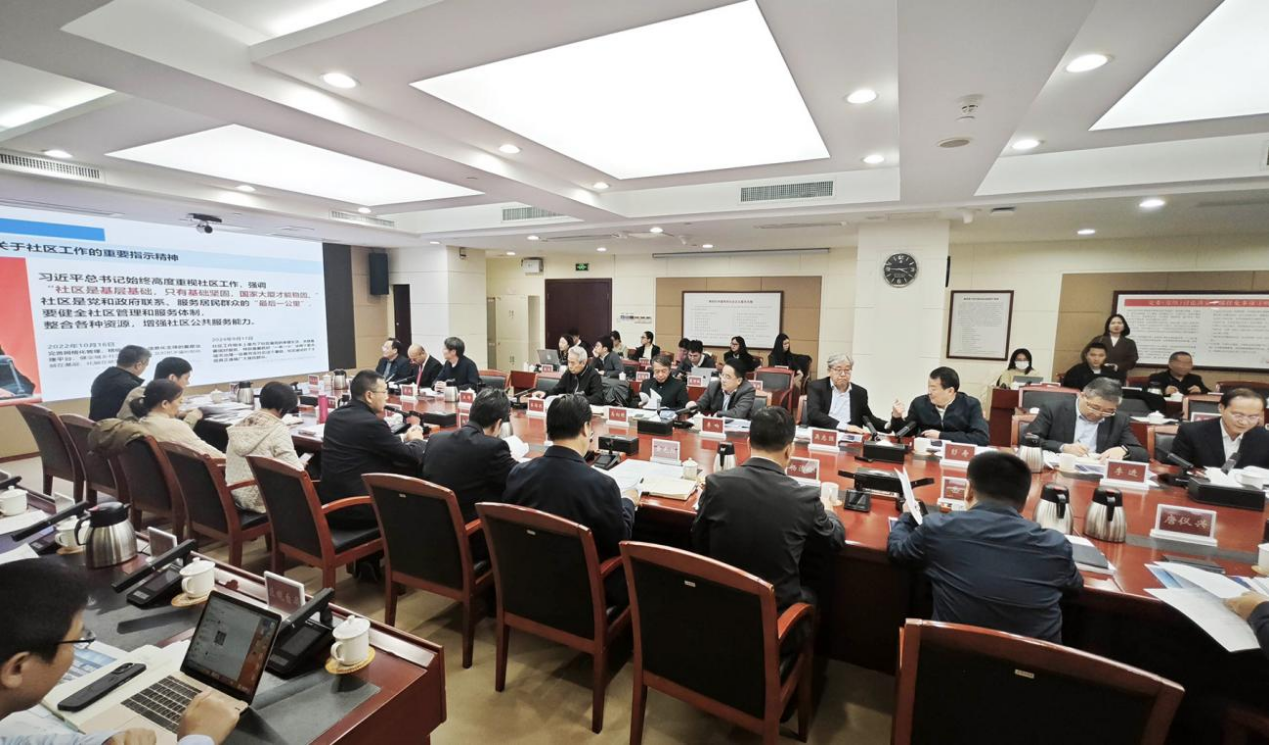
On the afternoon of the 25th, the academician and expert workshop
At the Guangdong Provincial Academician and Expert Symposium on Future Community Development held on the afternoon of the 25th, Li Xiang, as a key speaker, delivered a series of professional recommendations. He addressed dimensions including the development of Guangdong's "Future Community" 3.0 version, innovative approaches to replicate pilot experiences from Zhejiang, Henan, Chengdu, and Shanghai, and strategies for advancing higher-level open cooperation and integrated reforms. His proposals covered pilot standards, operational models, management philosophies, and institutional innovations. Li engaged in in-depth discussions with leaders from the Guangdong Provincial Department of Housing and Urban-Rural Development, Department of Natural Resources, Guangdong Provincial Social Work Department, as well as municipal and district governments of Guangzhou and Nansha, focusing on the Nansha District "Future City" demonstration project and provincial "Future Community" pilot initiatives.
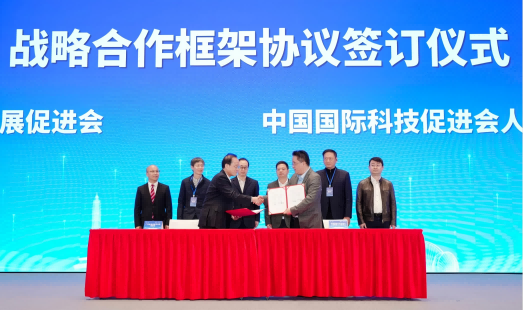
Signing Ceremony of Strategic Cooperation Framework Agreement
During the conference release session, the Guangdong Future Urban Development Promotion Association and the SUC Institute Working Committee officially signed a strategic cooperation framework agreement, jointly committed to promoting pilot projects for future cities and communities in Guangdong Province, international exchanges in the field of human settlements, and research on the compilation of international standards related to the "Greater Bay Area". The signing ceremony was witnessed by the principal officials of the Guangdong Provincial Department of Housing and Urban-Rural Development, relevant provincial departments, and responsible persons from the conference organizers.
During the conference, Li Xiang and his delegation, accompanied by provincial authorities, conducted a focused inspection of the pilot zones, communities, and industrial projects in Nansha District Future City initiative, laying the groundwork for advancing the pilots.